Baylor College of Medicine
P.LIU LAB
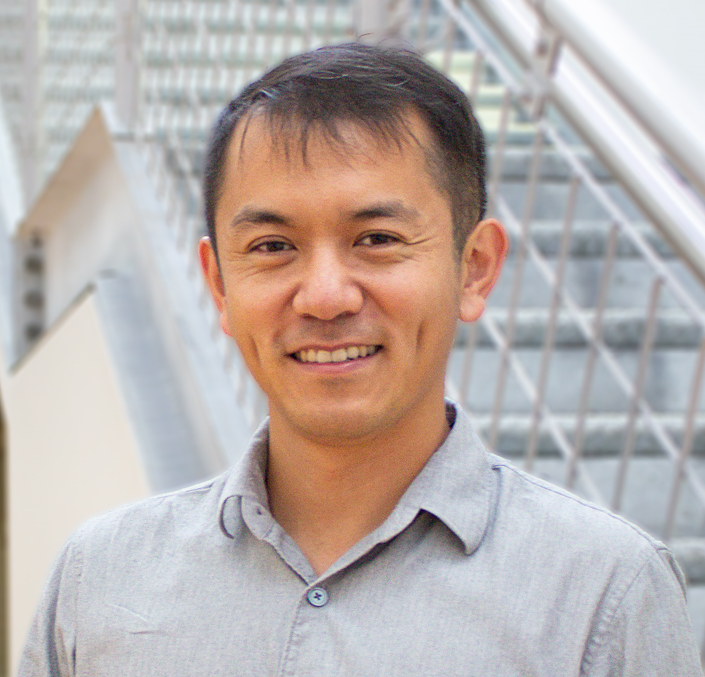
Pengfei Liu, Ph.D PRINCIPAL INVESTIGATOR
Dr. Pengfei Liu has contributed extensively to the advancement of genomic medicine for rare diseases over the past two decades. His work spans a broad range of technologies that have shaped modern clinical genetics—from early investigations of genome rearrangements using array-based platforms to clinical reanalysis of exome sequencing, whole genome sequencing (WGS) implementation, and, more recently, clinical transcriptome sequencing. These efforts have helped expand the diagnostic landscape for Mendelian disorders and laid the foundation for future precision medicine approaches.
Dr. Liu’s research includes a landmark study on clinical exome reanalysis published in The New England Journal of Medicine which was named one of the Top 10 Genomic Advances of the Year by NHGRI. He also developed and validated the clinical WGS test for the NIH Undiagnosed Diseases Network (UDN), now a central diagnostic tool at Baylor Genetics and widely used for patients with rare and undiagnosed conditions.
As Director of the Medical Genetics and Multiomics Laboratory (MGML) at Baylor College of Medicine, Dr. Liu leads efforts to bring transcriptome sequencing into clinical practice. His lab has established protocols to generate disease-relevant tissues through patient-derived cell transdifferentiation, enabling detection of splicing disruptions and gene expression anomalies not captured by DNA sequencing alone. This approach not only enhances diagnostic yield, but also supports downstream RNA-guided therapeutic development, including screening of antisense oligonucleotides (ASOs).
In addition to his research, Dr. Liu directs the ACGME-accredited Laboratory Genetics and Genomics Fellowship Program at Baylor, where he mentors and trains future leaders in clinical molecular diagnostics. He plays an active role in national consortia such as the UDN, GREGoR, RADIANT, and PrenatalSEQ, contributing to collaborative efforts to improve the diagnosis and treatment of rare genetic conditions.
LAB MEMBERS
Diagnostic RNA-seq Implementation
Our laboratory has launched clinical transcriptome sequencing as an innovative tool for molecular diagnosis, offering transcriptome-based analysis beyond DNA-based testing. Since 2024, we have been operating the RNA-seq diagnostic pipeline as part of the NIH Undiagnosed Diseases Network (UDN) sequencing core, supporting all clinical sites nationwide. Through this effort, we are generating clinical experience in the development, validation, and implementation of RNA-seq for routine diagnostics. Ongoing work focuses on defining clinical utility, refining analytical workflows, and expanding the interpretive value of transcriptome-based findings in rare disease diagnostics.
Enhancing Diagnostic Yield Through Cell Differentiation
A major limitation of diagnostic RNA-seq is that disease-relevant genes may be inadequately expressed in clinically accessible tissues such as blood or skin fibroblasts. To overcome this, we are developing scalable protocols to differentiate patient-derived cells into target cell types that better reflect tissue-specific gene expression. Our lab has successfully implemented transdifferentiation approaches to generate induced neurons from both fibroblasts and blood specimens, enabling functional assessment of variants associated with neurological disorders. These strategies are currently being applied in UDN cases to improve diagnostic sensitivity and expand the scope of RNA-seq–based variant interpretation.
Patient-derived differentiated cells as a platform for streamlining individualized therapies
We are exploring the potential of trans-differentiated, patient-specific cell lines for the design and validation of oligonucleotide therapies for Mendelian disorders. The successful development of such a patient-specific cell-based system holds the promise of enabling early intervention in genetic disorders. In one project, we are collaborating with families affected by SPTAN1 defects to develop antisense oligonucleotide (ASO) therapies. Our long-term goal is to establish a systematic framework for screening, validating, and recommending RNA-based therapies directly following molecular diagnostics.
Implementing a low-cost sequencing technology into clinical diagnostics
We are partnering with Ultima Genomics to explore the integration of high-throughput, low-cost next-generation sequencing technologies into clinical diagnostic applications, with the goal of expanding access to genomic testing. Our team is currently implementing and optimizing the entire workflow—including wet lab protocols, bioinformatics pipelines, and clinical interpretation processes—for both whole genome sequencing and RNA-seq in a diagnostic setting.
Characterization of clinically actionable genetic modifiers by sequencing individuals with large genomic deletions
In this project, we leverage our unique access to rare disease patient resources to conduct an “enhancer screen” using carefully selected patient samples. We aim to sequence a cohort of individuals with large, recurrent heterozygous genomic deletions to elucidate the impact and mechanisms of genetic modifiers. These selected individuals present two unique features that allow us to detect disease-risk modifying alleles with enhanced power compared to conventional GWAS studies: first, these unrelated individuals share identical large heterozygous deletions; second, they exhibit a wide range of incompletely penetrant clinical phenotypes. We are currently studying two disorders as proof-of-concepts: the 17q12 deletions associated with diabetes and kidney cysts, and the distal 1q21 deletions associated with neurodevelopmental disorders. The findings from this project are expected to bridge the gap between our understanding of highly penetrant, rare Mendelian variants and those with higher population frequencies that are associated with complex diseases.
Interested in participating or collaborating in our studies?
Lab Highlights
ACMG recognizes Pengfei Liu, PhD, FACMG @bcmhouston @BaylorGenetics with the 2022 #ACMGFoundation for Genetic and Genomic Medicine Dr. Michael S. Watson Genetic and Genomic Medicine Innovation Award. #ACMGMtg22 @LiuPF https://t.co/BkzXzQnKrG pic.twitter.com/o7flyJ0NEP
— ACMG (@TheACMG) March 23, 2022
NHGRI is pleased to announce that 11 talented researchers from across the US have received the 2021 Genomic Innovator Awards, with a total of $27 million in funding! Learn about the awards and the scientists' research interests: https://t.co/kntaAcHPeM. pic.twitter.com/QU1mCPghZj
— National Human Genome Research Institute (@genome_gov) September 30, 2021
Pawel Stankiewicz, Pengfei Liu @LiuPF, Ye Cao, and co @Baylor present a survey of mosaic variants in ~12,000 patients revealing that particular genes, pathways, and patients are predisposed to #mosaicism and that variants can indicate structural variation. https://t.co/jSbqYs9oDk
— Genome Medicine (@GenomeMedicine) August 22, 2019
Recent News
Feb 3, 2026
Pengfei Liu Named 2026 O’Donnell Award Recipient in Medicine
Nov 20, 2025
Lab Earns Rare Disease Scholar Award for Precision Therapeutics in CAMK2B Disorders
Oct 23, 2025
Pengfei Liu Receives BCM Young Alumnus Award
Oct 15, 2025
Lab Demonstrates the Value of Ultra-Deep RNA Sequencing for Mendelian Disorder Diagnostics Using the Ultima Genomics Platform
Oct 1, 2025
Warren Alpert Foundation Fellowship Awarded to Nhi Ho to Support Advanced Research Training
Sep 1, 2025
Jefferson Sinson Recognized with the Rolanette and Berdon Lawrence Family Achievement Award in Genetics
Aug 7, 2025
MGML Receives CAP Accreditation
Jul 30, 2025
Christiana Wang Receives NINDS F31 Fellowship to Investigate Disease Mechanisms and Therapeutic Strategies for SPTAN1-Related Disorders
Jul 15, 2025
Shenglan Li Awarded the Shan and Lee-Jun Wong Fellowship to Advance the Diagnosis of Mitochondrial Diseases
Mar 4, 2025
Baylor researchers develop and validate clinical diagnostic RNA sequencing test
Apr 8, 2024
Transdifferentiation with RNA sequencing aids diagnosis of genetic disorders
August 5, 2024
Baylor Genetics and Baylor College of Medicine Announce New Lab Agreement with Shared Commitment to Innovation and Rapid Implementation to get Critical Testing to Patients
May 14, 2024
AI System For Diagnosing Rare Diseases and Solving Medical Cold Cases
April 25, 2024
Using AI to improve diagnosis of rare genetic disorders
March 13, 2024
Christiana Wang receives the David L. Rimoin Inspiring Excellence Award for SPTAN1 n-of-1 therapy development
February 1, 2024
Ultra deep RNA-Seq for rare disease hypothesis exploration
Mar 23, 2022
Dr. Pengfei Liu receives 2022 Dr. Michael S. Watson Genetic and Genomic Medicine Innovation Award
Jan 27, 2022
As Genetic Variant Reanalysis Needs Grow, Researchers Turn to Automation
July 1, 2020
Whole Genome Sequencing: Development of Best Practices and Standards for Clinical Implementation
Jun 21, 2019
Reanalysis of molecular data yields new genetic diagnoses
Jun 20, 2019
Clinical Exome Reanalyses Lead to New Molecular Diagnoses
Feb. 4, 2019
Baylor Genetics Launches Whole Genome Sequencing
Join Us
We are currently looking for students, scientists and project coordinator in the Liu Lab
Pengfei Liu Ph.D.
Email:
pengfeil@bcm.edu
By Phone:
(713)-798-7725
Assistant ProfessorMolecular and Human Genetics
Baylor College of Medicine
DirectorACGME/ABMGG Laboratory Genetics and Genomics Fellowship Program
Baylor College of Medicine
Houston, Texas United States
Associate Clinical DirectorNGS/Molecular
Baylor Genetics
Address:One Baylor Plaza
Room 223E
Mail Stop BCM 225
Houston, TX 77030
Send us a message
Thank you! Your message has been received.